

Global conflict has driven sustained increases in oil and gas prices, placing significant pressure on agricultural systems worldwide. Conflict in the Middle East has already disrupted fertiliser shipments through the Straits of Hormuz. Over one-third of the global fertiliser trade moves through this route, and disruptions are hitting during the spring planting season. These recent events have made the relationship between energy, farm profitability and food security a key issue.
UK farmers could be forced to leave crops rotting in the fields unless ministers prioritise fuel supplies amid deepening global shortages, according to the Central Association of Agricultural Valuers (CAAV). According to the CAAV, red diesel prices have surged from around 65ppl to almost 140ppl at points, while nitrogen fertiliser costs are up 53% compared with last year. At the time of writing, the UK government has announced that the fuel duty rate for red diesel will be slashed from 10.18p to 6.48p per litre until the end of the year. Although this provides some respite to farmers, the fundamentals of rising energy prices remain.
This article examines the role of energy in UK farming, how energy price shocks are reshaping UK farm economics, and how farmers can use energy more sustainably.
Energy and Agriculture
Food production accounts for roughly 30% of global energy use, and farming remains heavily dependent on fossil fuels. As a result, energy price shocks quickly translate into higher production costs. Commodities linked to biofuel production – such as corn, sugar, palm oil and soybean oil – have seen sharp price increases since the current conflict began.

Since the early 2000s, a clear pattern has emerged: spikes in energy prices drive up fertiliser and key commodity prices. Prices then fall back, but rarely return to pre‑spike levels. Rising and volatile gas prices in the 2000s contributed to food price spikes and wheat market instability, and the escalation of the Russia‑Ukraine war in 2022 triggered further volatility in fertiliser and farm commodity markets.
Where does Agriculture use energy?
Annual energy use in EU open‑field agriculture is at least 1,431 PJ, around 3.7% of total EU energy consumption.
- Fertiliser production is the single largest energy user in EU agriculture, accounting for about 50% of all energy inputs.
- On‑farm diesel use accounts for around 30–31% of energy inputs.
- Pesticides, seeds, irrigation, storage and drying account for most of the remaining 5–10%.
Around 55% of these energy inputs are indirect – used in manufacturing fertiliser, pesticides, and other inputs before they reach the farm. This means official energy‑use statistics often underestimate agriculture’s true energy footprint.
Energy is also needed for heating, cooling, drying, refrigeration, processing, packaging and transport across long supply chains. “Food versus fuel” debates, such as those around US ethanol mandates in the early 2000s, highlight how closely intertwined food and energy markets are.
The Current Energy Landscape in UK Agriculture
The UK’s food system is heavily dependent on fossil fuels and imported inputs. Energy price volatility, alongside rising input costs since 2021–2022, has reshaped farm economics, putting margins under pressure.
Virtually all farms in the UK use energy from diesel-powered machinery and mains electricity. Within the EU, on-farm diesel use accounts for 31% of total energy inputs.
Direct Energy Use
Farmers use energy directly, through diesel to power tractors, harvesters, and transport, electricity for dairy parlours, grain drying, cold storage, irrigation, and climate control for horticulture and protected cropping.
Electricity use per hectare was highest on horticulture, specialist pigs and poultry, and dairy farms, with 52%, 50%, and 41% of these farms, respectively, using at least 150 kWh/ha in 2023/24.
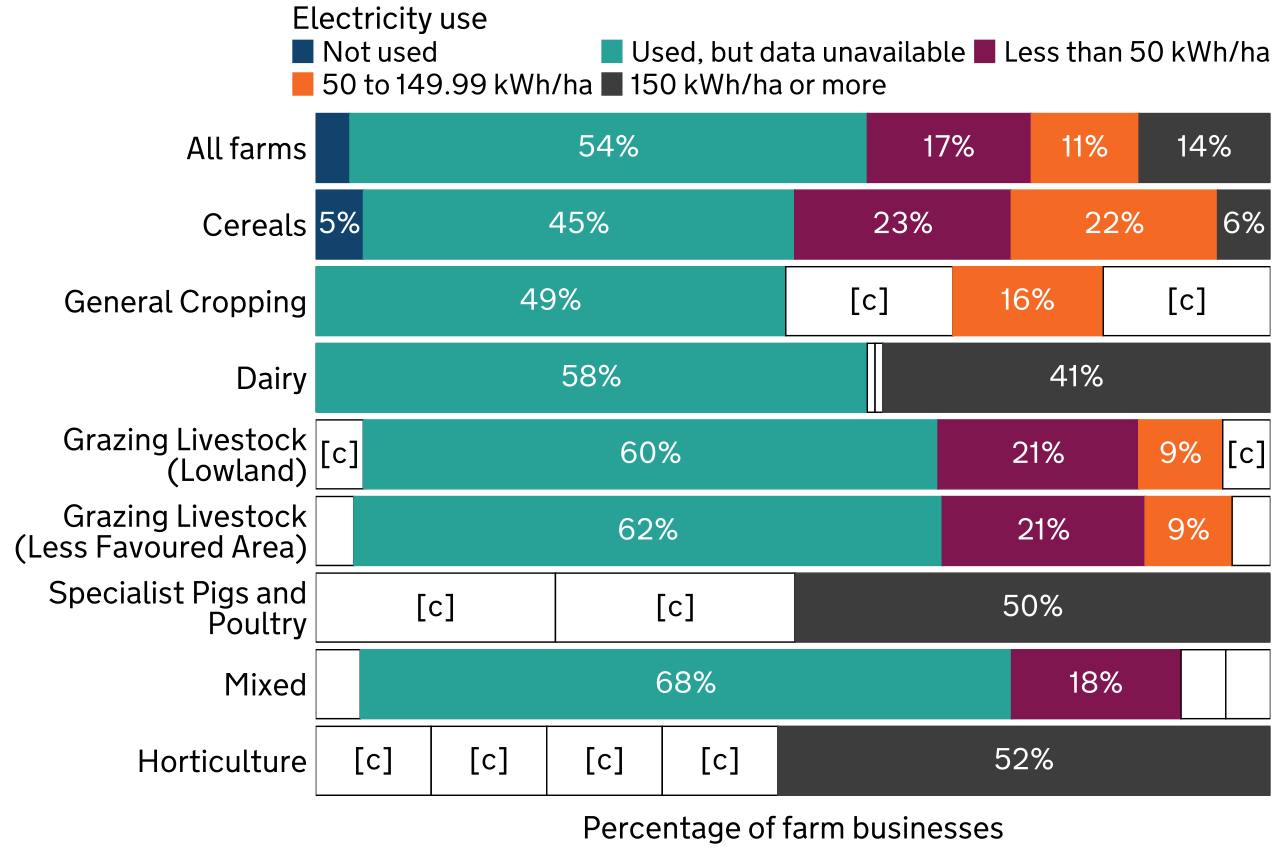
Horticulture, pig, and poultry farms use indoor systems more frequently, which operate over a smaller area than an outdoor system and require heating and lighting. Over 52% of horticulture businesses use more than 150 kWh/ha of electricity. Dairy farms are also less likely to have entirely indoor systems but generally use electric milking systems, resulting in relatively high energy use.
Indirect Energy Use
EU Data suggests that around 55% of total energy inputs to agriculture come from indirect sources. and are often not reported in official agricultural energy-use statistics. These include:
- Fertiliser use and production—especially nitrogen, which is tightly linked to natural gas prices;
- Manufactured agrochemicals;
- Through energy used to produce off-farm inputs such as animal feed;
- Transport and logistics across the UK’s long supply chains.
Because fertiliser production alone accounts for about half of total energy inputs in open‑field agriculture, any change in gas prices or fertiliser availability has a major impact on farm costs.
How Rising Prices Are Reshaping UK Farm Economics
Rising energy prices affect all farm sectors – livestock, arable, and horticultural operations. However, energy-intensive sectors such as glasshouse production are likely to be most vulnerable. Vertical and indoor farms are especially vulnerable to rising energy prices, which have already affected and slowed the sector’s development.
The UK is only 60% self-sufficient in food; for some categories of fruit and vegetables, this is 80-95%. This reliance on imports makes the country especially vulnerable to shocks in global markets, due to weak supply chains. The current stress on the UK food system is not a one-off. In 2023, extreme weather in Spain and Morocco reduced crop yields, prompting UK supermarkets to ration tomatoes and peppers. The war in Ukraine has driven up grain and sunflower oil prices. And the COVID pandemic and subsequent labour shortages have exposed how reliant farming and food distribution are on migrant workers.
The Bank of England has recently warned that food price inflation will reach 7% by the end of the year. The Food Foundation reports that 14% of UK households experience food insecurity, and policymakers are increasingly hearing concerns about food prices from constituents; there has been little sign of effective policies to tackle the root causes of the problem.
Sustainability as a Strategic Response
Farmers can build resilience by increasing efficiency, improving sustainability, and diversifying energy sources. At the same time, political and consumer pressure is growing for action on climate change and environmental targets.
In practice, farm energy audits can identify where energy use and bills can be reduced. Three broad strategies stand out:
- Improve efficiency;
- Lower dependency on fossil‑based inputs;
- Generate on‑site renewable energy.
Efficiency First: Reducing Energy Demand
The first step is to reduce overall energy demand through better efficiency. While renewables will play a larger role, fossil fuels will remain part of the mix for some time, so using them more efficiently matters.
Technologies and practices that can help include:
- Precision farming tools
- Reduced tillage and controlled traffic farming
- Upgrading to energy‑efficient equipment (e.g. LED lighting, variable‑speed drives, efficient pumps)
Regenerative and Ecological Practices
Regenerative and ecological approaches can cut indirect energy use by reducing fertiliser and other fossil‑fuel‑derived inputs. Examples include:
- Agroforestry, supported by Environmental Land Management schemes (ELMs);
- Soil health improvements that reduce fertiliser requirements;
- Integrated pest management to reduce pesticide use.
Circular Resource Use
Circular approaches – recycling and reusing resources – can also lower energy demand:
- Composting, manure management, and nutrient cycling;
- On‑farm biomass and crop‑residue utilisation;
- Farm‑scale waste‑to‑energy systems.
Alternative Energy Sources Transforming UK Agriculture
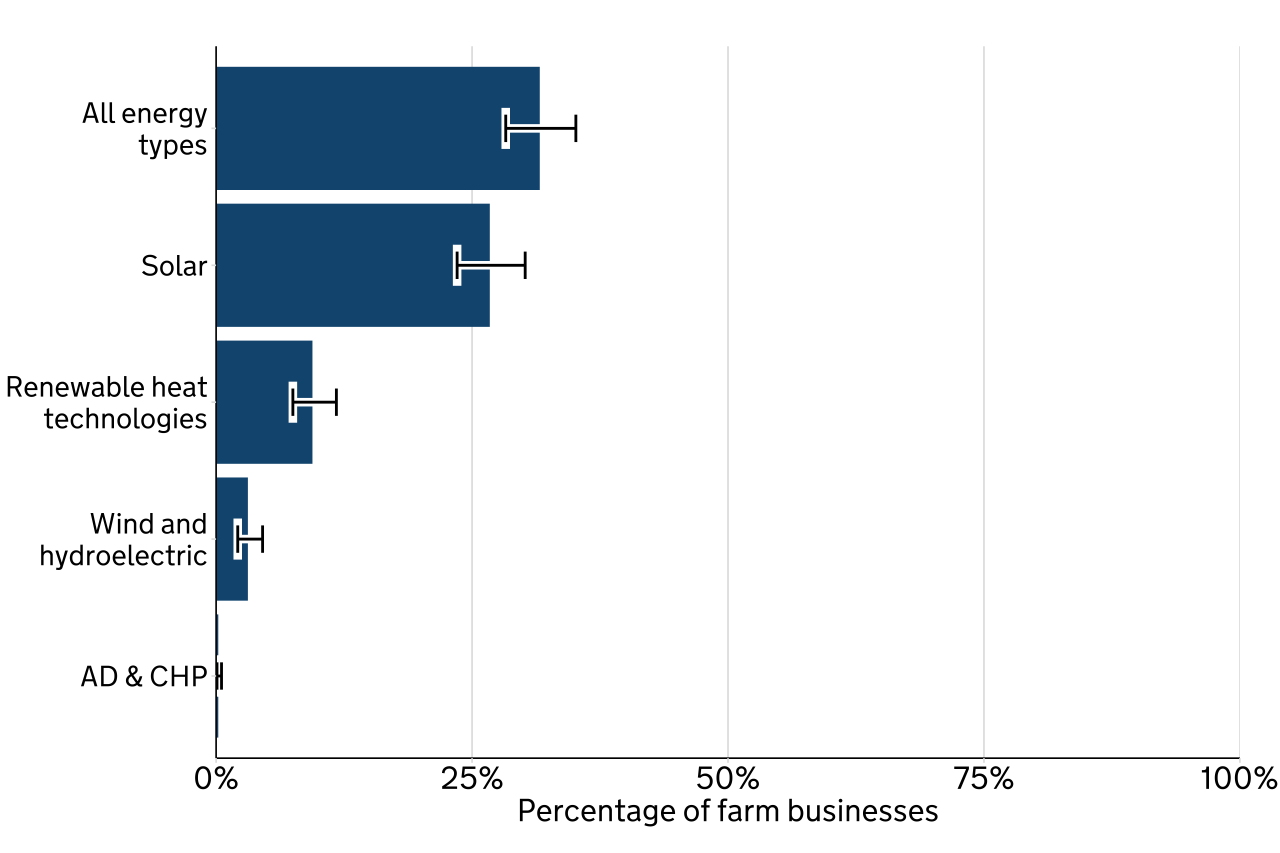
Alongside cutting use, farms can tap into alternative and renewable energy sources to reduce costs and create new income streams. In England, 32% of farm businesses generate renewable energy, with solar the most common technology (27%). Of those, 84% use rooftop solar and 10% use field‑based panels.
Solar Power and Agrivoltaics
Farmers can install solar panels on farm buildings and marginal land. Solar‑powered water pumps and electric fences can improve efficiency in remote livestock systems.
Agrivoltaics combines solar photovoltaic generation with agricultural production on the same land. Elevated or widely spaced panels can:
- Benefit shade‑tolerant crops;
- Reduce water evaporation;
- Improve panel efficiency in cooler conditions.
This can increase yields and offer dual revenue streams.
Somerset cheese producer Wyke Farms uses Solar Photovoltaic Arrays (solar panels) on farm rooftops to cool milk with ice water and heat exchangers. Solar panels on production facilities power a high‑efficiency maturation and dispatch store, while heat exchangers on fridge compressors generate hot water for packing areas and offices. The business also uses electric vehicles for on‑farm transport and local deliveries, powered by its own solar electricity.
Wind Energy
Wind turbines may also be an option for generating on-farm energy. However, farms need suitable wind profiles; hybrid systems combining wind and solar could improve year-round reliability. On windy days, excess electricity can be stored in batteries or fed back into the power grid, providing additional income.
Bio-energy and Anaerobic Digestion
Anaerobic digestion (AD) is increasingly used on UK dairy and mixed farms. AD plants process crops, slurry, manure and plant residues to produce biogas, which can:
- Generate on‑farm electricity and heat, or
- Be upgraded to biomethane and injected into the national gas grid
Full‑scale AD is a major investment and usually a significant diversification step, but it is particularly suited to medium‑sized dairy and livestock enterprises (up to around 500 cows), according to the NFU.
Mountstephen Farm in Devon supplies its AD plant with a mix of cow slurry from 160 cows and litter from 30,000 free-range broilers, plus some maise. An 80 kilowatt-electric (kWe) CHP provides all the farm’s power, including three robotic milking machines, the dairy and a poultry unit. Farmers can use this heat on the farm for space heating and biomass drying.
Tesco, the UK’s largest supermarket, does not pay farmers directly to install AD, but it does financially reward environmental performance and reduce the cost of investing in AD. These incentives include environmental bonus payments to farmers in its Sustainable Dairy, Beef, Lamb and Pig Groups for emissions reduction and sustainability outcomes (which AD can help deliver).
Other ‘Green’ fuels and Hydrogen
Agriculture is a source of ammonia, methane and hydrogen – gases that can be converted into green fuels. Hydrogen can be extracted from ammonia and methane in slurry and then burnt or used in fuel cells, though many of these technologies are still emerging or at the research stage.
Tractor manufacturers are developing engines that run on hydrogen and methane. In theory, farms could produce their own green fuel from slurry to power machinery, cutting diesel use, reducing fossil‑fuel dependency and lowering greenhouse gas emissions.
Biomass
Around 8% of UK farms use or supply biomass fuels such as tree trimmings, energy crops, crop residues and by‑products. Woodchip‑ or pellet‑fed boilers are a convenient option for on‑site heating.
Turning agricultural waste into useful products requires thermochemical and biochemical processes that convert biomass into energy and fertiliser. Instead of discarding crop residues and organic waste, they can be turned into biofuels, biochemicals and bioplastics.
Key processes include:
- Combustion – burning biomass to generate heat and power. This is considered more climate‑friendly than fossil fuels because it fits within the natural carbon cycle.
- Fermentation – producing ethanol from crops such as sugarcane or corn for use as transport fuel.
- Pyrolysis – heating biomass without oxygen to produce biochar, bio‑oil and syngas. Biochar can be used as a soil amendment, while bio‑oil and syngas can be used as fuels or feedstocks.
- Gasification – a related process using limited oxygen to produce syngas, which can be used for energy or converted into chemicals.
Emerging Technologies
Two emerging technologies with potential to improve on‑farm energy sustainability are electrification and green hydrogen.
- Electric tractors are close to or already commercially available. Hybrid electric drivetrains can improve energy efficiency and functionality and reduce CO₂ emissions. However, high upfront costs and technical limits for heavy‑duty tasks remain barriers.
- Green hydrogen is a promising fuel for heavy agricultural equipment. Early evidence suggests it could cut emissions by up to 60% while lowering fuel costs, although infrastructure and technology are still developing.
Capital support for on-farm renewable energy
A range of capital support is available to help fund renewable energy projects.
- Commercial lenders such as UK Agricultural Finance provide tailored finance for renewable energy investments, including installation, equipment and associated costs.
- Government support. The Improving Farm Productivity Grant offers funding for capital items that improve productivity, including robotic and automatic equipment and solar installations. Applications are assessed against defined criteria.
In 2026, £225 million in capital grants will be available to support farmers, land managers and rural businesses in delivering environmental improvements across England. Applications open in July, with the full list of eligible items published in May.
These funding routes are designed to help farms transition to renewable energy, cut energy costs and develop new income streams. It is important to check eligibility and prepare the necessary documentation early.
The Future: Building an Energy‑Resilient UK Food System
Energy diversification is essential for long‑term stability and to meet the challenge of rising energy costs. This is not just to withstand geopolitical shocks, but also the threat of extreme weather and climate change.
Farms must adapt by improving efficiency, reducing reliance on fossil-based inputs, and investing in renewable energy. This will position them to remain competitive and resilient. The transition will require investment, policy support, and innovation, but it also presents an opportunity to build a more sustainable and secure food system.